SOLID Design Principles in Salesforce (Ep. 1) – What are the SOLID Design Principles?
|

SOLID Design Principles in Salesforce (Ep. 1) – What are the SOLID Design Principles?

If you’re here, you had better be ready to learn some of the most amazing concepts that the developers that came before you and I put together. The SOLID principles are some of the most important software design principles in existence, and if you want to produce some truly excellent and flexible code THIS IS…
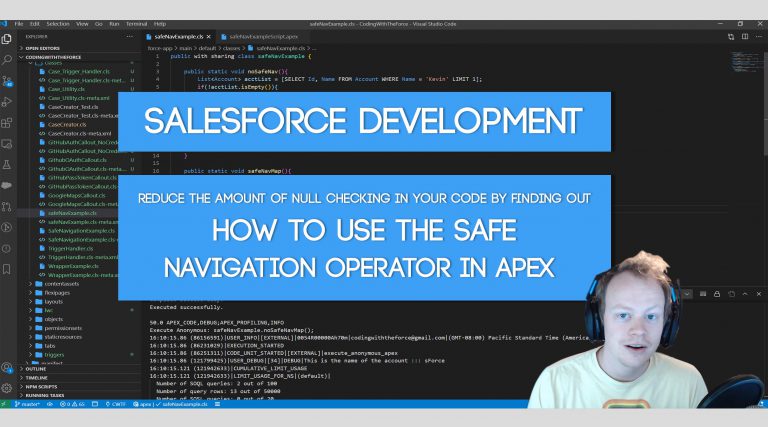
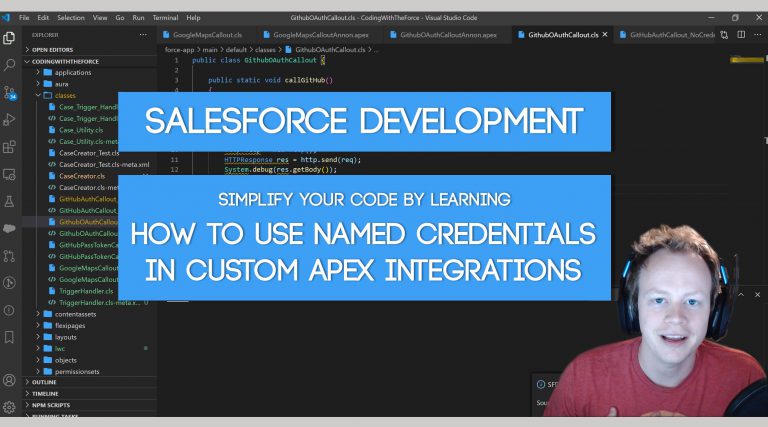
Salesforce Development Tutorial: How to use the Safe Navigation Operator in Apex to reduce the amount of null checking in your codebase
|

Salesforce Development Tutorial: How to use the Safe Navigation Operator in Apex to reduce the amount of null checking in your codebase

Why use the Safe Navigation Operator?? My guy, this is the best thing Salesforce has added to the Apex language in forever! Embrace it! To elaborate on that though, let me hit you with this thrilling sales pitch. Just imagine a late night commercial selling you garbage, but the garbage is actually good. Are you…

Salesforce Development Tutorial: How to use Named Credentials to simplify your Apex Salesforce Integrations
|

Salesforce Development Tutorial: How to use Named Credentials to simplify your Apex Salesforce Integrations

Why should you bother using Named Credentials? In short, it’s gonna save you a bunch of time, code and unnecessary configuration, especially when you are authenticating using OAuth. Named credentials basically simplify the authentication portion of your callouts to to external services and allow you do it declaratively through configuration. No matter how hardcode a…

Salesforce Development Tutorial: How to Implement a Trigger Framework
|

Salesforce Development Tutorial: How to Implement a Trigger Framework

Why use a Trigger Framework? There are a couple big reasons why you would want to implement a trigger handler. Let’s check them out below: 1) It makes your triggers way easier to test. By putting your logic in your trigger handler, instead of your trigger you allow yourself a much simpler path to testing…

Salesforce Development Tutorial: How to use the SFDX Scanner Salesforce CLI Plugin for Static Code Analysis
| | |

Salesforce Development Tutorial: How to use the SFDX Scanner Salesforce CLI Plugin for Static Code Analysis

Why Use Static Code Analysis Tools? There are two major reasons to use static code analysis tools: 1) They make you a better developer. These industry standard rules exist for a reason. To make code clean, modular and easy for all the developers that come after you to deal with. So be a kewl guy…

Salesforce Development Tutorial: How to Setup Uncrustify to automatically format your code in Visual Studio Code
| | |

Salesforce Development Tutorial: How to Setup Uncrustify to automatically format your code in Visual Studio Code

Why would you want to setup Auto Code Formatting? Aside from the fact that it’s both magical and amazing, it also enables you to easily do a couple things: 1) If you get onboarded to a project with a horrific looking codebase with nightmarish formatting, you can fix that by running a single command on…

Salesforce Development: How to use Custom Settings to Bypass Your Triggers in Production
| | | |

Salesforce Development: How to use Custom Settings to Bypass Your Triggers in Production

Why On Earth Would We Ever Build Trigger Bypasses? This is an excellent question and one I wondered myself… until my team and I had to do a monstrous 50,000,000 record load into Salesforce for a deployment, lol. I was stumped… how on earth could I ever pull this off without taking days or weeks…

Salesforce Development: How to Make Sure Your Process Builders Never Fire Your Apex Triggers
| | |

Salesforce Development: How to Make Sure Your Process Builders Never Fire Your Apex Triggers

Why Would We Want Our Process Builders to Bypass Our Triggers? If you didn’t know process builders fire your triggers every single time they make an update to a record or insert a new record. If you have 5 different update actions in your process builders that means you could potentially fire your triggers 5…